

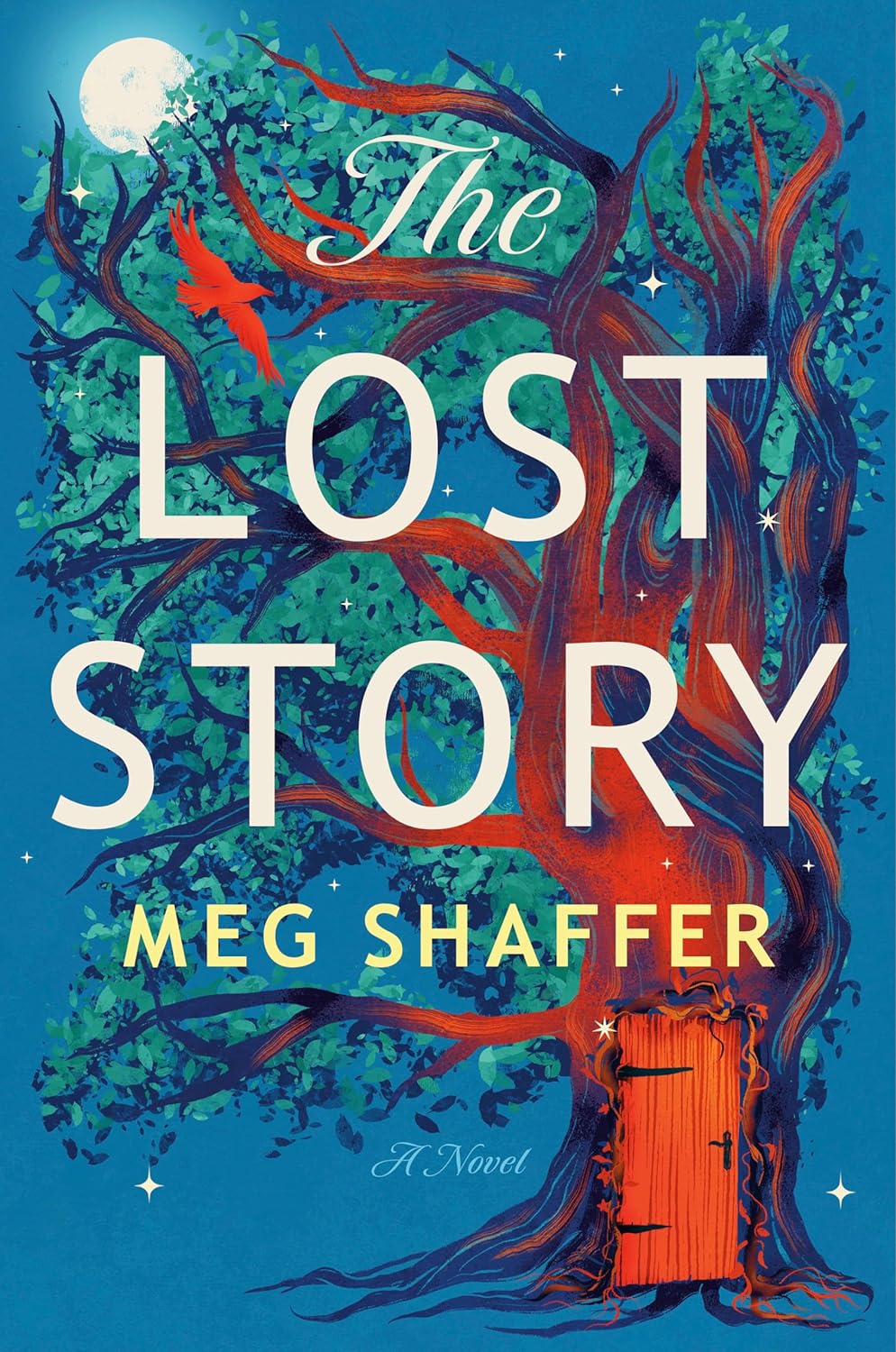
The Stats
Title: The Lost Story
Author: Meg Shaffer
Publisher: Ballantine Books (16 July, 2024)
Genre: General Fiction (Adult), Magical Realism, Romance
Trigger Warnings: Death, Violence, Child Abuse, Homophobia, Abuse
Read if you like: The Wishing Game, Beasts of Extraordinary Circumstances
Rating: 4 Stars
Thank you to Meg Shaffer, Ballantine Books, and NetGalley for pre-approving me to receive an electrical Advanced Review Copy of The Lost Story. I especially would like to thank Megan Whalen from Random House Publishing Group for reaching out to me regarding the novel.
Book of the Month July 2024 Pick
The Review
Oh, how I loved The Wishing Game by Meg Shaffer. It has been almost a full year since I read the novel, and there is still an everlasting impact. Thus, when Megan Whalen from Random House Publishing Group reached out to me for a chance to read the ARC for Shaffer’s second novel, The Lost Story, I was more than ecstatic.
After vanishing without a trace in Red Crow State Forest, two teenage boys—Jeremy Cox and Ralph (Rafe) Howell—magically reappear, unharmed and strangely healthier, right where they went missing six months later, with no recollection of how they survived or where they were. Fifteen years later, Jeremy and Ralph are recruited by Emilie Wendell, a 20-something-year-old, Stevie Nicks loving vet tech, and her rat, Fritz, to return to Red Crow and look for her half-sister, who went missing shortly before them.
Whereas The Wishing Game focused on the magic found within yourself—the power of personal transformation and self-discovery—The Lost Story dives deep into the magical realism genre, weaving a narrative that explores the enchantment of external worlds and their ability to reflect and challenge our inner truths. The novel showcases, with its 20 – 40 year old cast of characters, how you are never too old to be sucked into a magical wonderland. The perfect book for those, like me, who still secretly hope that one day, an owl will deliver us an acceptance letter, or our closet will open to a winter wonderland.
Told from the perspective of an omniscient storyteller, the chapters bounce between the main plotline and the storyteller’s personal opinions. This technique was ambitious of Shaffer. The storyteller sections had an overtly casual tone, which made the novel feel like it was designed for a younger audience than the adult fiction genre it was designated as. It also affected the pacing of the novel, which could deter some readers as the literary element was used to speed the story along. However, upon the revelation of who the storyteller is, the prose and pacing make considerable sense—which swings the negative aspects back around to positives, at least for me.
What truly stood out to me was the allegory of queer liberation. When Jeremy and Rafe vanish, it is 1980s West Virginia—the height of the AIDS epidemic. The magical land of Shenandoah can quite literally be interpreted as being forced to hide in the closet, as they follow a red crow through a door on a tree trunk. The land they enter is a world straight out of a Lisa Frank Trapper Keeper, and everyone there is accepting of their young, teenage queer love. However, there is one “Bad Place” in Shenandoah known as “Lost Virginia,” a replica of the town in West Virginia the boys left behind, indicating that at home, they only knew fear. This duality highlights the contrast between oppressive societal norms and the freedom found in spaces of acceptance. By creating a magical realm where the characters can exist authentically, Shaffer crafts a poignant commentary on the enduring struggle for queer liberation and the universal longing for a place to belong. One can thus infer that the moral of the story, as all good fairy tales have a moral, is that one is not born with hate; hate is thrusted upon us – but it can be untaught.
Overall, The Lost Story is a beautifully crafted follow-up to The Wishing Game that showcases Meg Shaffer’s talent for intertwining heartfelt narratives with a touch of magic. The novel takes readers on an emotional journey that balances whimsical escapism with profound themes of identity, acceptance, and resilience. Shaffer’s ability to marry magical realism with deeply human experiences ensures The Lost Story will linger in the minds and hearts of readers long after the final page is turned. For fans of nostalgic magic, The Lost Story is a must-read. It’s a poignant reminder that no matter where life takes us, there’s always room for wonder and a chance to reclaim the parts of ourselves we thought were lost.
Short Review (AKA TLDR)
Meg Shaffer’s The Lost Story is a captivating follow-up to The Wishing Game, blending heartfelt storytelling with magical realism. The story showcases, with its 20 – 40 year old cast of characters, how you are never too old to be sucked into a magical wonderland. The perfect book for those, like me, who still secretly hope that one day, an owl will deliver us an acceptance letter, or our closet will open to a winter wonderland.
Told through the lens of an omniscient storyteller, the chapters bounce between the main plotline and the storyteller’s personal opinions. Shaffer’s bold narrative style mixes the casual tones with profound allegories, offering a whimsical and deeply emotional reading experience. By creating a magical realm where the characters can exist authentically, Shaffer crafts a poignant commentary on the enduring struggle for queer liberation and the universal longing for a place to belong. One can thus infer that the moral of the story, as all good fairy tales have a moral, is that people are not born with hate, hate is thrusted upon us – but it can be untaught.
Ultimately, The Lost Story is a tale of self-discovery and belonging, celebrating the enduring power of wonder and the chance to rediscover lost parts of ourselves. A must-read for fans of nostalgic magic and richly layered stories.
 duffrunstough
[…] I love Megan Whalen from Random House Publishing Group for pre-approving me on NetGalley for The Lost Story because Shaffer is quite possibly my new favourite author. I love how she brings the whimsy from […]
LikeLike
[…] I’m excited for it: This is giving me if The Lost Story was a horror novel – and I am obsessed with that idea. Though Chuck Wendig has an impressive […]
LikeLike