


As the number of backlogged books I need to review slowly dwindle, I have been looking at some other options as to what posts I can have. One option I was looking into was Top 10 Tuesday, by That Artsy Reader Girl. So for this week’s top 10 Tuesday….
Books Set in Another Time (These can be historical, futuristic, alternate universes, or even in a world where you’re not sure when it takes place you just know it’s not right now.)
-That Artsy Reader Girl
One of my goals this year was reading more classic literature. Thus, I decided to make this list Books Written in Another Time,
1. Invisible Man – Ralph Ellison (1952)
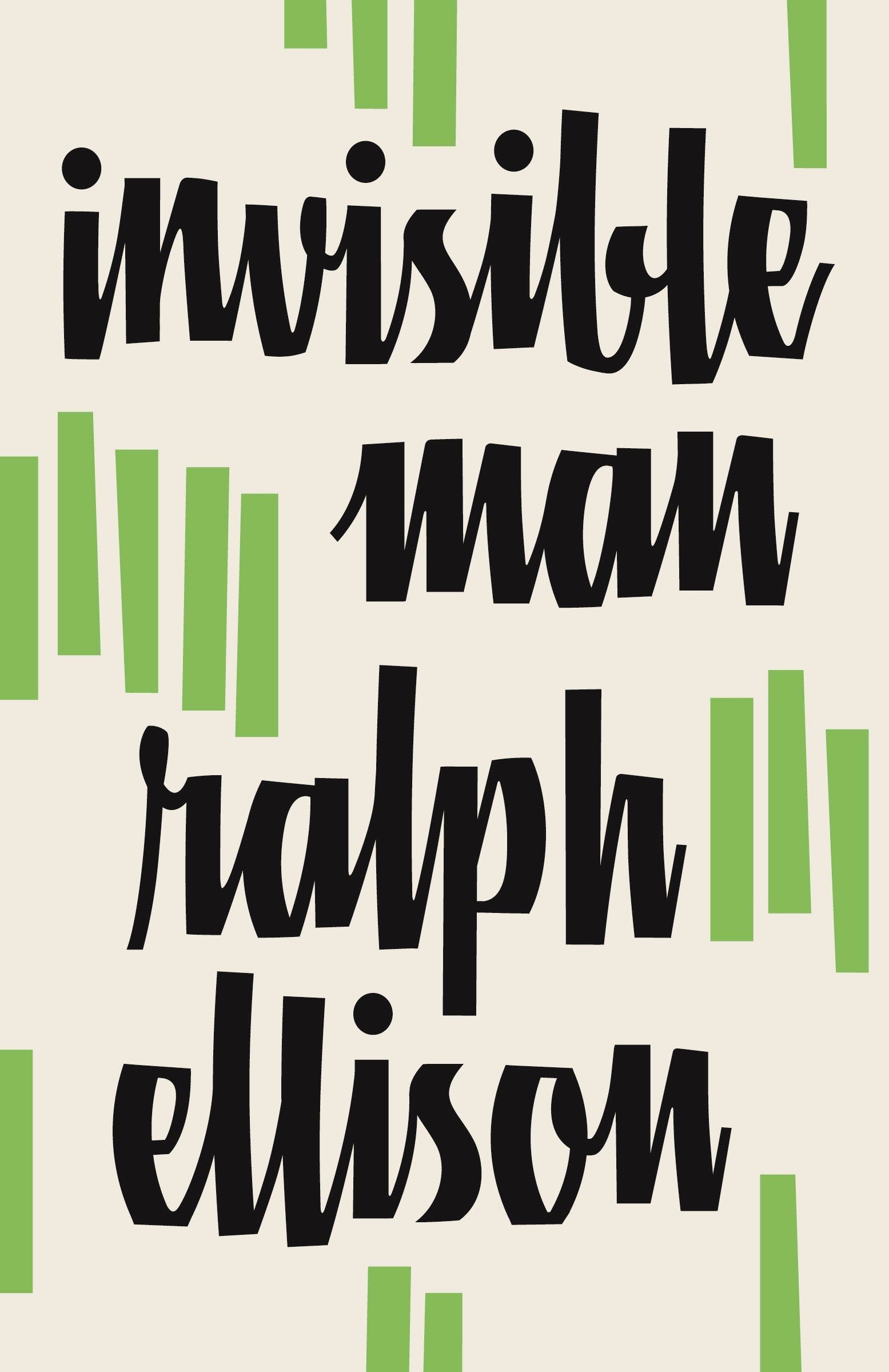
First published in 1952 and immediately hailed as a masterpiece, Invisible Man is one of those rare novels that have changed the shape of American literature. For not only does Ralph Ellison’s nightmare journey across the racial divide tell unparalleled truths about the nature of bigotry and its effects on the minds of both victims and perpetrators, it gives us an entirely new model of what a novel can be.
As he journeys from the Deep South to the streets and basements of Harlem, from a horrifying “battle royal” where black men are reduced to fighting animals, to a Communist rally where they are elevated to the status of trophies, Ralph Ellison’s nameless protagonist ushers readers into a parallel universe that throws our own into harsh and even hilarious relief. Suspenseful and sardonic, narrated in a voice that takes in the symphonic range of the American language, black and white, Invisible Man is one of the most audacious and dazzling novels of our century.
2. Wuthering Heights – Emily Bonte (1847)

Emily Brontë’s only novel, a work of tremendous and far-reaching influence, the Penguin Classics edition of Wuthering Heights is the definitive edition of the text, edited with an introduction by Pauline Nestor. Lockwood, the new tenant of Thrushcross Grange, situated on the bleak Yorkshire moors, is forced to seek shelter one night at Wuthering Heights, the home of his landlord. There he discovers the history of the tempestuous events that took place years before; of the intense relationship between the gypsy foundling Heathcliff and Catherine Earnshaw; and how Catherine, forced to choose between passionate, tortured Heathcliff and gentle, well-bred Edgar Linton, surrendered to the expectations of her class. As Heathcliff’s bitterness and vengeance at his betrayal is visited upon the next generation, their innocent heirs must struggle to escape the legacy of the past.
3. The Catcher in the Rye – J.D. Salinger (1951)
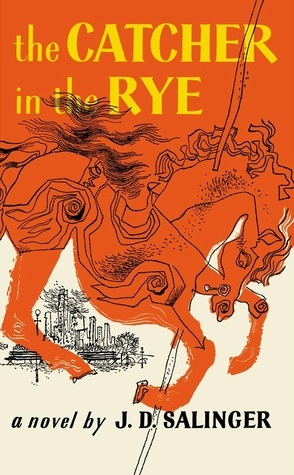
It’s Christmas time and Holden Caulfield has just been expelled from yet another school…
Fleeing the crooks at Pencey Prep, he pinballs around New York City seeking solace in fleeting encounters—shooting the bull with strangers in dive hotels, wandering alone round Central Park, getting beaten up by pimps and cut down by erstwhile girlfriends. The city is beautiful and terrible, in all its neon loneliness and seedy glamour, its mingled sense of possibility and emptiness. Holden passes through it like a ghost, thinking always of his kid sister Phoebe, the only person who really understands him, and his determination to escape the phonies and find a life of true meaning.
The Catcher in the Rye is an all-time classic in coming-of-age literature- an elegy to teenage alienation, capturing the deeply human need for connection and the bewildering sense of loss as we leave childhood behind.
J.D. Salinger’s (1919–2010) classic novel of teenage angst and rebellion was first published in 1951. The novel was included on Time‘s 2005 list of the 100 best English-language novels written since 1923. It was named by Modern Library and its readers as one of the 100 best English-language novels of the 20th century. It has been frequently challenged in the court for its liberal use of profanity and portrayal of sexuality and in the 1950’s and 60’s it was the novel that every teenage boy wants to read.
4. Catch-22 – Joseph Heller (1961)
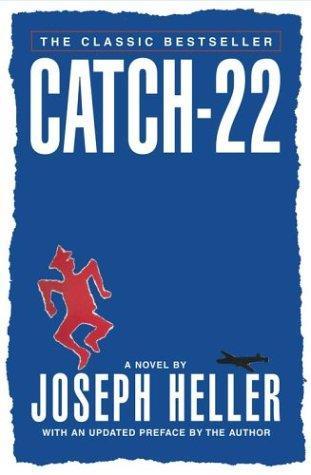
Fifty years after its original publication, Catch-22 remains a cornerstone of American literature and one of the funniest—and most celebrated—books of all time. In recent years it has been named to “best novels” lists by Time, Newsweek, the Modern Library, and the London Observer.
Set in Italy during World War II, this is the story of the incomparable, malingering bombardier, Yossarian, a hero who is furious because thousands of people he has never met are trying to kill him. But his real problem is not the enemy—it is his own army, which keeps increasing the number of missions the men must fly to complete their service. Yet if Yossarian makes any attempt to excuse himself from the perilous missions he’s assigned, he’ll be in violation of Catch-22, a hilariously sinister bureaucratic rule: a man is considered insane if he willingly continues to fly dangerous combat missions, but if he makes a formal request to be removed from duty, he is proven sane and therefore ineligible to be relieved.
This fiftieth-anniversary edition commemorates Joseph Heller’s masterpiece with a new introduction by Christopher Buckley; a wealth of critical essays and reviews by Norman Mailer, Alfred Kazin, Anthony Burgess, and others; rare papers and photos from Joseph Heller’s personal archive; and much more. Here, at last, is the definitive edition of a classic of world literature.
5. The Grapes of Wrath – John Steinbeck (1939)

The Pulitzer Prize-winning epic of the Great Depression, a book that galvanized—and sometimes outraged—millions of readers.
First published in 1939, Steinbeck’s Pulitzer Prize-winning epic of the Great Depression chronicles the Dust Bowl migration of the 1930s and tells the story of one Oklahoma farm family, the Joads—driven from their homestead and forced to travel west to the promised land of California. Out of their trials and their repeated collisions against the hard realities of an America divided into Haves and Have-Nots evolves a drama that is intensely human yet majestic in its scale and moral vision, elemental yet plainspoken, tragic but ultimately stirring in its human dignity. A portrait of the conflict between the powerful and the powerless, of one man’s fierce reaction to injustice, and of one woman’s stoical strength, the novel captures the horrors of the Great Depression and probes into the very nature of equality and justice in America. At once a naturalistic epic, captivity narrative, road novel, and transcendental gospel, Steinbeck’s powerful landmark novel is perhaps the most American of American Classics.
6. Slaughterhouse-Five – Kurt Vonnegut (1969)

Kurt Vonnegut’s masterpiece, Slaughterhouse-Five is “a desperate, painfully honest attempt to confront the monstrous crimes of the twentieth century” ( Time ).
Selected by the Modern Library as one of the 100 best novels of all time
Slaughterhouse-Five , an American classic, is one of the world’s great antiwar books. Centering on the infamous World War II firebombing of Dresden, the novel is the result of what Kurt Vonnegut described as a twenty-three-year struggle to write a book about what he had witnessed as an American prisoner of war. It combines historical fiction, science fiction, autobiography, and satire in an account of the life of Billy Pilgrim, a barber’s son turned draftee turned optometrist turned alien abductee. As Vonnegut had, Billy experiences the destruction of Dresden as a POW. Unlike Vonnegut, he experiences time travel, or coming “unstuck in time.”
An instant bestseller, Slaughterhouse-Five made Kurt Vonnegut a cult hero in American literature, a reputation that only strengthened over time, despite his being banned and censored by some libraries and schools for content and language. But it was precisely those elements of Vonnegut’s writing—the political edginess, the genre-bending inventiveness, the frank violence, the transgressive wit—that have inspired generations of readers not just to look differently at the world around them but to find the confidence to say something about it. Authors as wide-ranging as Norman Mailer, John Irving, Michael Crichton, Tim O’Brien, Margaret Atwood, Elizabeth Strout, David Sedaris, Jennifer Egan, and J. K. Rowling have all found inspiration in Vonnegut’s words. Jonathan Safran Foer has described Vonnegut as “the kind of writer who made people—young people especially—want to write.” George Saunders has declared Vonnegut to be “the great, urgent, passionate American writer of our century, who offers us . . . a model of the kind of compassionate thinking that might yet save us from ourselves.”
More than fifty years after its initial publication at the height of the Vietnam War, Vonnegut’s portrayal of political disillusionment, PTSD, and postwar anxiety feels as relevant, darkly humorous, and profoundly affecting as ever, an enduring beacon through our own era’s uncertainties.
7. As I Lay Dying – William Faulkner (1930)
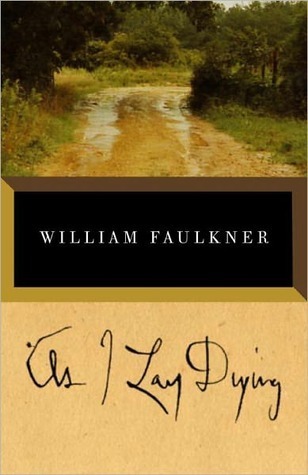
As I Lay Dying is Faulkner’s harrowing account of the Bundren family’s odyssey across the Mississippi countryside to bury Addie, their wife and mother. Narrated in turn by each of the family members — including Addie herself — as well as others; the novel ranges in mood, from dark comedy to the deepest pathos. Considered one of the most influential novels in American fiction in structure, style, and drama, As I Lay Dying is a true 20th-century classic.
This edition reproduces the corrected text of As I Lay Dying as established in 1985 by Noel Polk.
8. Their Eyes Were Watching God – Zora Neale Hurston (1937)
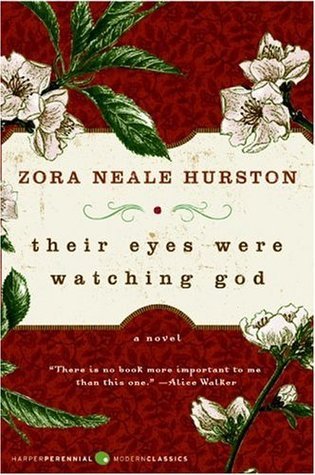
Fair and long-legged, independent and articulate. Janie Crawford sets out to be her own person -no mean feat for a Black woman in the 30’s. Zora Neale Hurston’s classic 1937 novel follows Janie from her nanny’s plantation shack to Logan Killick’s farm, to all Black Eatonville, to the Everglades, and back to Eatonville- where she gathers in “the great fish-net” of her life. Janie’s quest for identity takes her on a journey during which she learns what love is, experiences life’s joys and sorrows, and comes home to herself in peace.
9. Crime and Punishment – Fyodor Dostoyevsky (1886)
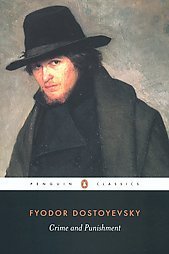
Raskolnikov, a destitute and desperate former student, wanders through the slums of St Petersburg and commits a random murder without remorse or regret. He imagines himself to be a great man, a Napoleon: acting for a higher purpose beyond conventional moral law. But as he embarks on a dangerous game of cat and mouse with a suspicious police investigator, Raskolnikov is pursued by the growing voice of his conscience and finds the noose of his own guilt tightening around his neck. Only Sonya, a downtrodden sex worker, can offer the chance of redemption.
10. Moby-Dick, or The Whale – Herman Melville (1851)
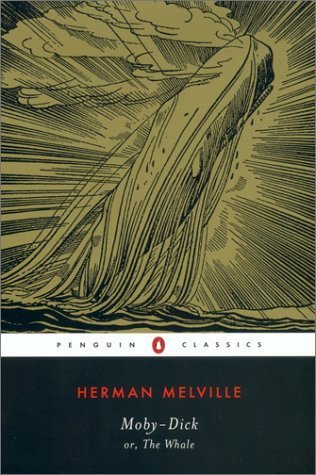
“It is the horrible texture of a fabric that should be woven of ships’ cables and hawsers. A Polar wind blows through it, and birds of prey hover over it.”
So Melville wrote of his masterpiece, one of the greatest works of imagination in literary history. In part, Moby-Dick is the story of an eerily compelling madman pursuing an unholy war against a creature as vast and dangerous and unknowable as the sea itself. But more than just a novel of adventure, more than an encyclopaedia of whaling lore and legend, the book can be seen as part of its author’s lifelong meditation on America. Written with wonderfully redemptive humour, Moby-Dick is also a profound inquiry into character, faith, and the nature of perception.
This edition of Moby-Dick, which reproduces the definitive text of the novel, includes invaluable explanatory notes, along with maps, illustrations, and a glossary of nautical terms.
 duffrunstough