

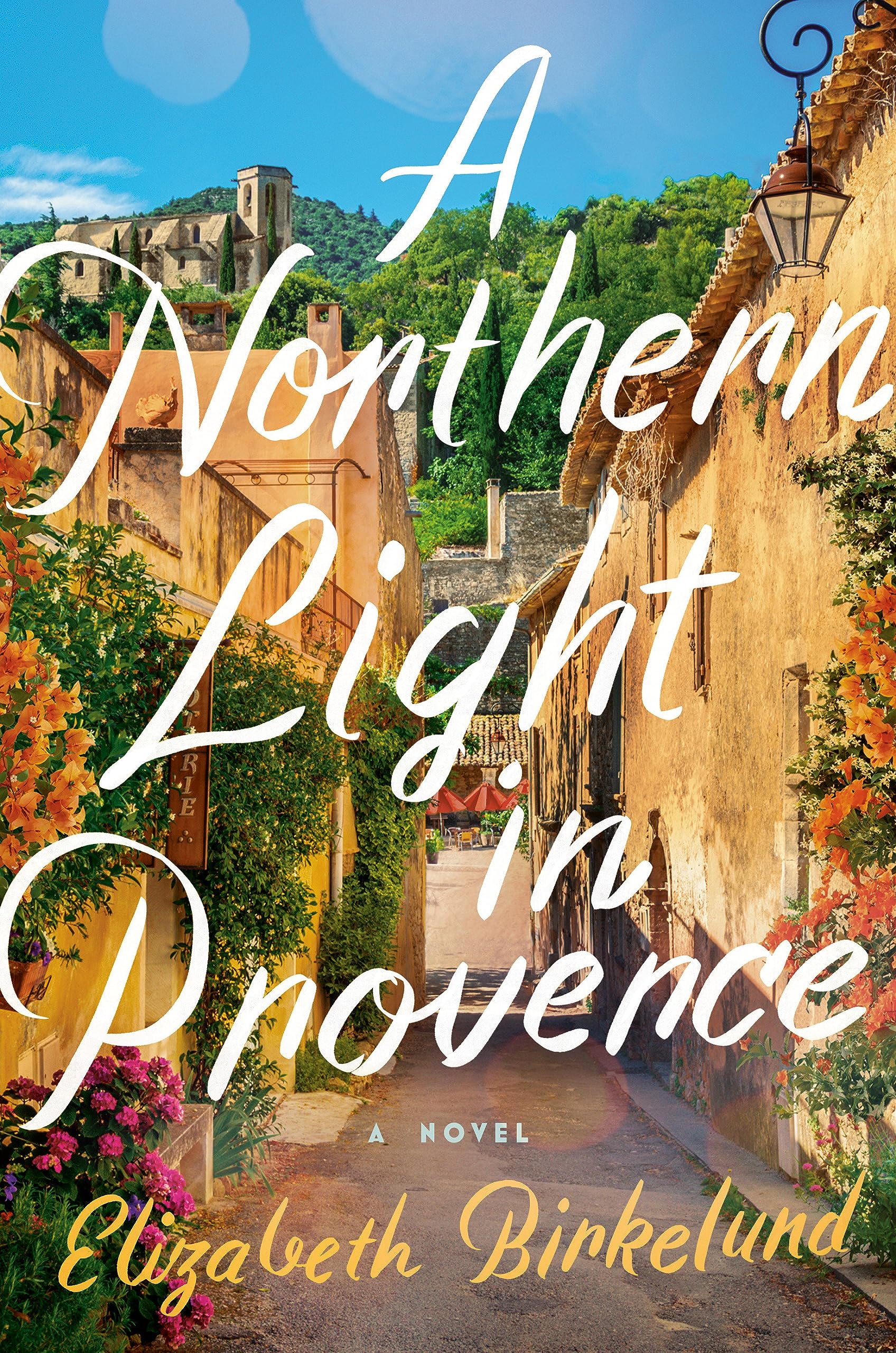
The Stats
Title: A Northern Light in Provence
Author: Elizabeth Birkelund
Publisher: Ballantine Books (21 May, 2024)
Genre: General Fiction (Adult), Contemporary, Romance
Trigger Warnings: Cancer, Death, Infidelity
Read if you like: Holiday Country, One Italian Summer
Rating: 2.5 Rounded up to 3 Stars
Thank you to Elizabeth Birkelund, Ballantine Books, and NetGalley for pre-approving me to receive an electrical Advanced Review Copy of A Northern Light in Provence. I especially would like to thank Megan Whalen from Random House Publishing Group for reaching out to me regarding the novel.
The Review
I’ll admit, finishing this novel was a challenge. I breezed through the first half, but the second half didn’t hold the same allure. Looking back, I realized I started this book all the way back in May 2024—a testament to how much I struggled to stay engaged. I suspect my mixed feelings might not align with the majority opinion, so take this review with a grain of salt.
Spoiler Alert: Some plot details ahead.
The premise of A Northern Light in Provence immediately intrigued me. Ilse, a literary translator from Greenland, is fluent in Greenlandic, Danish, English, and French but has never left her tiny, isolated community. When Geoffrey “Po” Labaye, a renowned Troubadour poet, personally requests her to translate his work into English, Ilse is doubtful of her ability to handle the archaic Provençal dialect. She convinces her publisher to send her on a two-week, expenses-paid trip to Provence to work directly with Po, setting the stage for what I thought would be an unforgettable literary journey.
Elizabeth Birkelund’s prose shines in the first half of the book. The lush descriptions of Provence pulled me right into the setting, and I felt like I was walking alongside Ilse as she explored the region. The dynamic between Ilse and Po was a highlight. Their conversations about language, art, and life had a lyrical quality that made me savor every word. Po became not just a mentor to Ilse, but a guide to seeing the world through a more poetic lens.
Where the novel faltered for me was the introduction of Po’s son, Geoffrey “Frey” Labaye. His arrival shifted the story’s focus, and not for the better. Frey is marrying Ilse’s publisher’s daughter, and Po’s translated works are meant to be a limited-edition wedding gift for the guests. However, within a week of meeting Ilse, Frey is inexplicably smitten with her and ends up cheating on his pregnant fiancée. The romance between Ilse and Frey felt rushed and unearned, making it hard for me to sympathize with their so-called star-crossed love. Instead of enhancing the narrative, this subplot clashed with the themes of self-discovery and artistic growth that initially drew me in.
I couldn’t shake the feeling that the third act’s sudden pivot toward melodrama undermined what the novel had been building. A story centered solely on Ilse’s personal and professional growth—especially her bond with Po and the enchanting Provençal landscape—would have been far more compelling.
Despite its flaws, I would still recommend A Northern Light in Provence. The evocative prose and the relationship between Ilse and Po are reason enough to give it a try. However, be prepared for a narrative shift that may not sit well with everyone. For me, the novel ended up being a mixed bag, but I can see its appeal for readers who enjoy dramatic, albeit uneven, romance subplots.
Short Review (AKA TLDR)
While the novel starts strong with its enchanting prose and engaging premise, it falters in the second half. Ilse, a Greenlandic literary translator, travels to Provence to work with Troubadour poet Geoffrey “Po” Labaye on an English translation of his work. The vivid descriptions of Provence and Ilse’s mentor-mentee relationship with Po shine, offering moments of lyrical beauty and personal growth.
However, the story loses momentum with the abrupt introduction of Po’s son, Frey, whose rushed romance with Ilse feels forced and undermines the narrative’s focus. (I detest Frey)
Despite its uneven pacing and flawed subplot, the book’s evocative atmosphere and compelling first half make it worth considering, particularly for those who know what it is like to fall in love with your environment.
 duffrunstough