
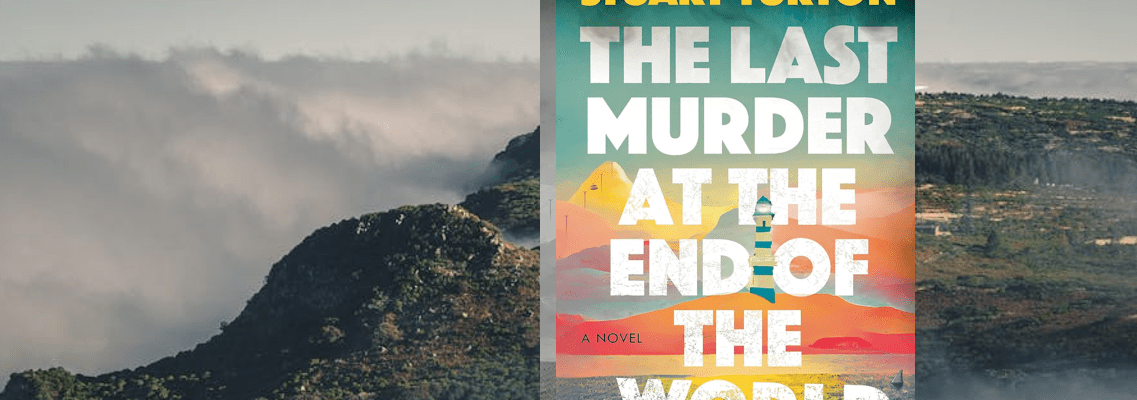

The Stats
Title: The Last Murder at the End of the World
Author: Stuart Turton
Publisher: Sourcebooks Landmark (21 May, 2024)
Genre: General Fiction (Adult), Science Fiction, Thriller, Dystopia
Trigger Warnings: Murder, Violence, Death, Existentialism, Suicide/Self Sacrifice
Read if you like: Agatha Christie, The Devil and the Dark Water, Yours for the Taking, The Future
Rating: 3 stars
Thank you to Stuart Turton, Sourcebooks Landmark, and NetGalley for pre-approving me to receive an electrical Advanced Review Copy of The Last Murder at the End of the World.
The Review
My opinion regarding Stuart Turton’s previous novels has always been mixed. While I loved The 7 1/2 Deaths of Evelyn Hardcastle, The Devil and the Dark Water fell flat, failing to capture the same magic. With this third offering, The Last Murder at the End of the World, I was uncertain of what to expect. However, when I was approved for the ARC on NetGalley, I felt a surge of excitement and hope, eager for Turton to recapture the brilliance of his debut.
In this novel, Turton paints a haunting picture of the very last human settlement on Earth: a Greek island surrounded by a deadly, all-consuming fog. The fog is an ever-present threat, reminiscent of Stephen King’s The Mist—a lethal, omnipresent force that keeps the inhabitants isolated and compliant. This claustrophobic setting is made even more unsettling when one of the settlement’s elders, a revered scientist, is murdered, sparking a desperate investigation. The stakes couldn’t be higher, as solving the crime is directly tied to the survival of humanity.
The premise is undoubtedly ambitious, weaving dystopian science fiction with the intricate plotting of a whodunit. At first glance, all the ingredients for an unforgettable story are present. Yet, despite the potential, the execution didn’t quite land for me. The sheer number of characters made it difficult to keep track of who was who and their respective roles in the narrative. This confusion was compounded by the narrative structure, which alternates between the first-person perspective of Abi, the island’s omnipresent AI, and third-person accounts of the villagers. While I appreciated the attempt at an innovative narrative style, it often left me disoriented and disrupted the flow of the story.
This mental tug-of-war with the novel dampened my enjoyment. I didn’t exactly “DNF” it, but every time I set the book down, I found myself reluctant to pick it back up. It wasn’t until I managed to get the audiobook on Libby that I pushed myself to the finish line. Even then, it was more out of curiosity about the big twist than genuine investment in the story.
Ultimately, I felt The Last Murder at the End of the World was a step up from The Devil and the Dark Water, which is why I landed on a three-star rating. That said, I couldn’t shake the feeling that Turton’s storytelling has become increasingly complex at the expense of clarity and connection. As Goodreads user Chris Bissette aptly put it, Turton is the “M. Night Shyamalan of fiction.” As an M. Night Shyamalan fan myself, I couldn’t agree more. Turton’s books, much like Shyamalan’s films, are built around high-concept ideas and shocking twists. I find myself returning to their works, not necessarily because they always succeed, but because I admire their audacity.
I’ll keep reading Stuart Turton’s novels as they come out, much like I keep watching Shyamalan’s films, simply because they are his. However, I worry that the bar set by The 7 1/2 Deaths of Evelyn Hardcastle may have been too high, leaving subsequent works in its shadow. While The Last Murder at the End of the World didn’t fully meet my expectations, it reminded me why I’ll always give Turton’s books a chance: for the thrill of chasing that elusive, awe-inspiring twist.
Short Review (AKA TLDR)
While the premise is undoubtedly ambitious, combining facets of dystopian science fiction with an elaborate whodunit approach, the result did not hit the way the way that I was hoping for. I felt that all the elements were there, but the sheer amount of characters often left me confused and distracted – especially with the perspective switches which occurred between Abi, in the first person, and the villagers, in the third. Ultimately, this novel was better than “The Devil and the Dark Water”, which is how I settled on a 3 star rating.
 duffrunstough
[…] a recent review, I compared the author to being the M. Night Shyamalan of writing. However, I have since changed […]
LikeLike