

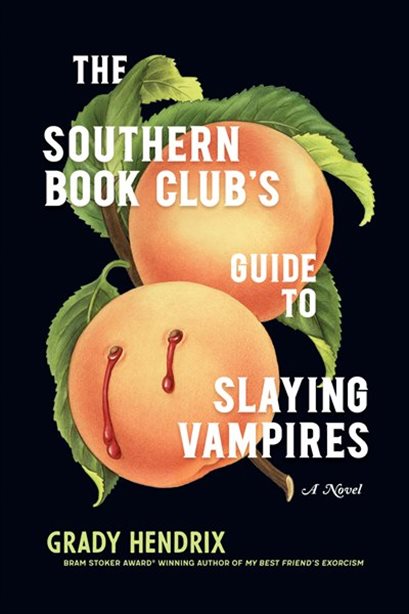
The Stats
Title: The Southern Book Club’s Guide to Slaying Vampires
Author: Grady Hendrix
Narrated By: Bahni Turpin
Publisher: Quirk Books (7 April, 2020)
Time: 13 Hours 50 Minutes
Genre: General Fiction (Adult), Women’s Fiction, Gothic, Paranormal, Horror
Trigger Warnings: Child abuse, Child Grooming, Child Self Harm, Sexual Assault, Domestic Violence, Emotional Abuse, a lot of talk about Nazis
Read if you like: Stepford Wives, Gaslight
Goodreads Choice Award Nominee for Best Horror (2020)
Feature Photo Stock Photo provided by Olia Danilevich
The Review
Wow! “The Southern Book Club’s Guide to Slaying Vampires” by Grady Hendrix is a lot deeper than I originally thought it would be. Set in the late 80s to early 90s, the synopsis promised a blend of Fried Green Tomatoes and Steel Magnolias with a supernatural twist, but I would state that this novel is closer to being the Southern version of Stepford Wives meets Dracula.
The novel centers around Patricia Campbell, a housewife who finds solace in her book club meetings with other Charleston mothers who share a love for true crime and suspenseful fiction. When a mysterious and attractive stranger, James Harris, moves into the neighborhood, Patricia’s instincts start to kick in, suspecting that he may be involved in the local children’s disappearance. As Patricia begins her own investigation, she uncovers a terrifying truth and realizes that she and her book club are the only ones who can protect their community from this blood-sucking fiend.
One aspect that immediately struck me about this book is the author’s ability to create a vivid and atmospheric setting. The Southern backdrop adds a unique flavor to the story, and the portrayal of the women’s book club and their interactions felt authentic and relatable. Hendrix mentions in the author’s note that he chose to maintain the setting of his childhood and sought inspiration from his mother’s book club. I personally feel this was a smart decision on Hendrix’s part. As someone who spent some of the early 2000s living in the South as a child, the attitudes the adults expressed were very similar to those I observed growing up, where perception was everything and everyone would sprinkle you with Splenda, aka that fake sugar, while stating “Bless her Heart” behind backs.
Past the surface level of the book, the social commentary at the root of the story is what really drew me in. The antagonist, James Harris, is one of the most repulsive characters encountered in recent horror fiction. Hendrix effectively uses him to explore the theme of how seemingly harmless individuals can be the most dangerous. Consistently compared to Ted Bundy, James Harris appears to be the “big bad” of the novel, but the other characters all exhibit “monstrous” qualities themselves – sexism, racism, obsessive greed, etc. – which continues to promote the harm James perpetuates. It also touches on the exploitation and gentrification of Black communities at the hands of capitalism. I believe that the novel would have been more impactful if it had been written by a woman, specifically a Black woman. Hendrix’s use of satire is apparent in showing the ridiculousness of situations.
Having listened to the audiobook, I had a completely different perspective than other readers. The audiobook is read by Bahni Turpin, a Black Michigan native, whose voice I fell in love with when I listened to “The Hate U Give.” Hendrix never explicitly states the race of the Campbell family, and with Turpin’s voice, I assumed Patricia was Black. It wasn’t until I finished reading and began looking at other reviews that I noticed most people assumed that the Campbell family was white.
While I enjoyed the book, there were a few things that made it fall short of 5 stars. I was hoping for more involvement from the women in the book club. The main character, Patricia, takes on the investigation mostly on her own, which was a missed opportunity to showcase the collective strength and intelligence of the book club members. Additionally, the character of Mrs. Greene, who does much of the hard work as the underdog, could have been a compelling main character, providing deeper exploration of race and class dynamics within the story. Instead, Ms. Greene was limited to an afterthought. However, the aspect that really made me bump this down to 4 stars was the unnecessarily incessant mention of Hitler and Blue’s obsession with the Nazi party.
The pacing of the novel can be uneven at times, with prolonged periods of downtime, but the book still manages to deliver intense and memorable scenes. The attic scenes, in particular, are disturbing and unsettling, showcasing the author’s ability to create a sense of dread.
Overall, “The Southern Book Club’s Guide to Slaying Vampires” is a dark and gripping novel that combines horror, humor, and social commentary. It may not be the scariest book in the genre, but it offers a unique and thought-provoking take on vampires. Fans of Grady Hendrix’s previous works and readers who enjoy smart and satirical horror will find this book to be an enjoyable read.
4 out of 5 Stars!
Short Review (AKA TLDR)
“Wow! “The Southern Book Club’s Guide to Slaying Vampires” by Grady Hendrix exceeded my expectations with its depth. Set in the late 80s to early 90s, the story centers around Patricia Campbell, a housewife who finds solace in her Charleston book club. When a mysterious stranger, James Harris, moves into the neighborhood, Patricia suspects him of being involved in local children’s disappearances. As she investigates, she uncovers a terrifying truth and realizes that she and her book club are the community’s last defense against this blood-sucking fiend.
The book impresses with its vivid Southern setting and authentic portrayal of the book club members. Beyond the surface, the novel delves into compelling social commentary. The antagonist, James Harris, is disturbingly repulsive, serving as a vessel to explore how seemingly harmless individuals can be the most dangerous. The book addresses themes of sexism, racism, greed, and the exploitation of Black communities. Listening to the audiobook, narrated by Bahni Turpin, offered a unique perspective, leading me to assume Patricia was Black for the majority of the novel.
Despite enjoying the book, I hoped for more involvement from the book club members and deeper exploration of characters like Mrs. Greene. I also hated the frequent mention of Hitler and Blue’s unnecessary obsession with the Nazi party. Had this whole part been removed, there wouldn’t be anything different as Blue was also underutilized. Nevertheless, “The Southern Book Club’s Guide to Slaying Vampires” remains a dark and gripping novel, blending horror, humor, and social commentary, sure to captivate fans of Grady Hendrix’s work and those who appreciate smart and satirical horror.”
 duffrunstough